
Smart E-Power - Key Facts
SMART-E-POWER ® - SUSTAINABLE ENERGY EFFICIENCY FOR THE RAILWAY SECTOR
The requirements for electrical components in the rail sector have changed significantly in recent years. In addition to reliability and technical performance, the focus today is increasingly on energy efficiency, low lifecycle costs, low-maintenance design, and sustainability. Particularly in rail transport, where systems remain in service for decades, technical optimizations have a significant long-term impact on cost structures, energy consumption, and environmental performance.
Bächli AG specializes precisely in these requirements. Bächli develops highly specialized inductive components such as transformers, chokes, filters, and windings for rail vehicles and energy infrastructure. The focus is always on how to increase efficiency, reduce maintenance, and implement sustainability in a technically sound manner.
A HOLISTIC APPROACH - LIFECYCLE COSTS RATHER THAN PURCHASE PRICE
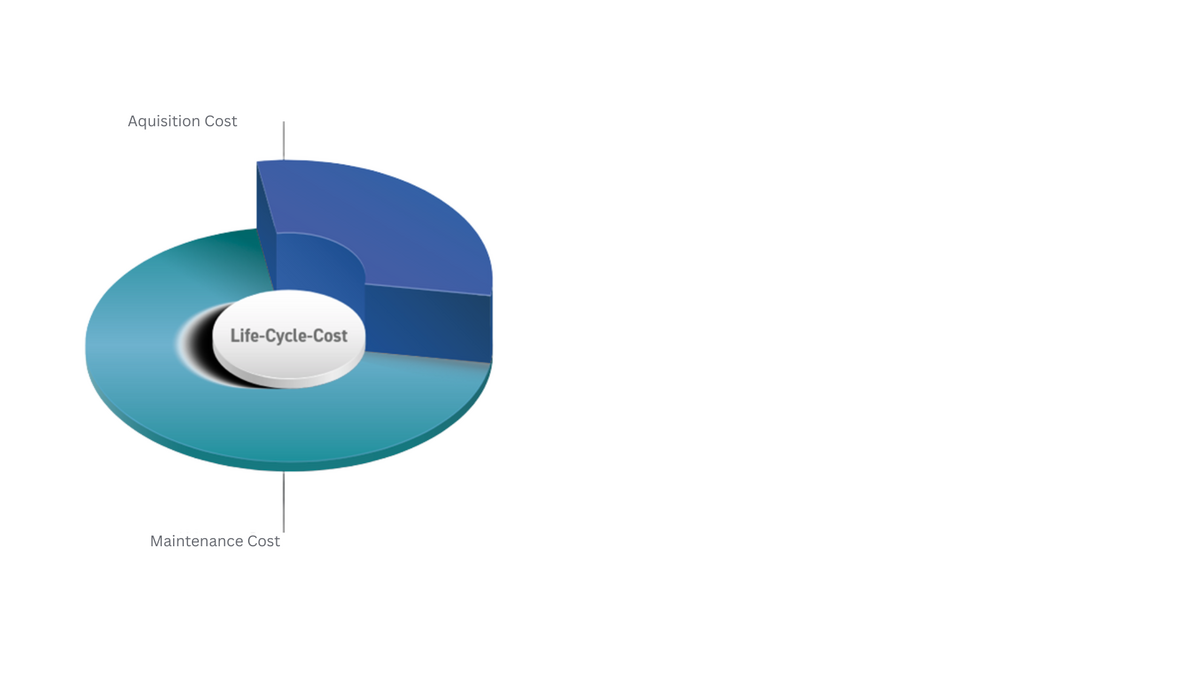
In the rail sector, it has long been recognized that the economic assessment of a system does not end with the purchase price. Over the course of a train’s service life, which is often around 30 years, maintenance costs accrue that are frequently two to three times higher than the initial purchase price. This makes it clear that so-called life-cycle costs play a central role.
For manufacturers and operators, this means that decisions must increasingly be made with a holistic approach. It is not the lowest purchase price that matters, but rather the total costs over decades - including energy consumption, maintenance, spare parts, and downtime.
SMART-E-POWER ® - EFFICIENCY THROUGH INNOVATIVE TECHNOLOGY
With its Smart-E-Power® product line, Bächli AG is pursuing precisely this approach. The goal is to develop inductive components that offer maximum efficiency with minimal losses throughout their entire lifecycle.
This is based on modern materials and optimized design principles. In terms of materials, the company relies on grain-oriented steel sheets and low-loss core technologies such as UNICORE, among others. These technologies ensure that magnetic and electrical losses are significantly reduced.
A particular focus is on minimizing no-load losses, which occur continuously in transformers—regardless of whether a load is present or not. Since these losses occur constantly throughout the year, even small increases in efficiency lead to significant savings in energy consumption.
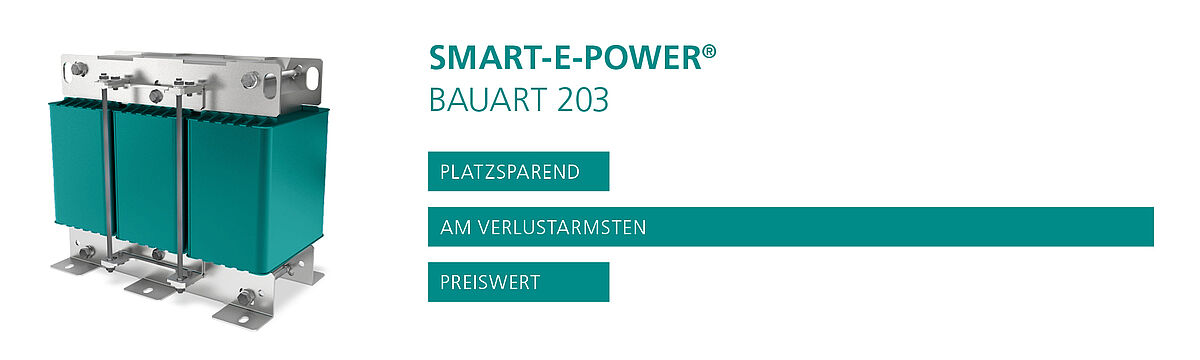
No-load losses occur in the transformer’s magnetic core and arise even when no load is connected. These losses are primarily caused by hysteresis and eddy current losses, which result from the continuous reversal of the magnetic field in the iron core. Since transformers in the railway sector are often operated continuously while connected to the grid, these losses add up significantly over the entire operating life. By using grain-oriented sheets and optimized core technologies, these losses can be significantly reduced. Even small improvements in efficiency thus lead to noticeable energy savings over the years, as well as an improved carbon footprint.
LIFETIME COST-EFFECTIVENESS
Although Smart-E-Power® components are often more expensive to purchase than conventional solutions, their economic benefits become very clear over time. Lower energy consumption, reduced maintenance, and a longer service life result in a significantly better overall cost-benefit ratio.
In many cases, the higher initial investment pays for itself after just a few years of operation. Over a 30-year period, this results in substantial savings, as both energy and maintenance costs are permanently reduced and the need for additional replacement investments can be delayed.
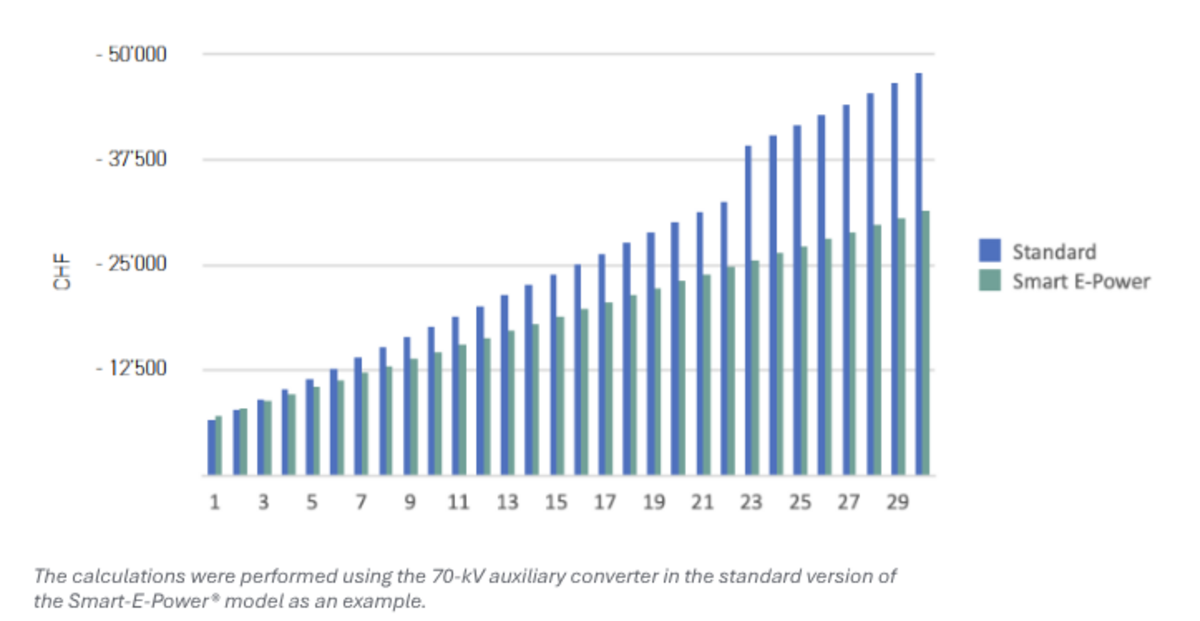
The chart shows, that the costs for the Smart-E-Power product fall below those of the standard solution starting in the third year. This suggests that the savings in energy and maintenance costs quickly offset the initial purchase costs.
MAINTENANCE-FREE OPERATION AS A KEY DEVELOPMENT GOAL
A key development goal for Bächli AG is to reduce maintenance requirements to the point of complete maintenance-free operation. Although transformers and choke coils are generally robust components with no moving parts, maintenance costs still arise in day-to-day railway operations.
These costs result primarily from contamination caused by brake dust, carbon dust from pantographs, or salt spray, as well as from the aging of the electrical insulation. In addition, air-based cooling causes dirt to accumulate in cooling channels, which can impair efficiency over the long term.
To address these challenges, Bächli relies on the consistent encapsulation of sensitive components. This effectively protects insulation areas from environmental influences, thereby drastically reducing maintenance requirements.
TECHNICAL CONFLICT OF GOALS - EFFICIENCY, WEIGHT, AND COOLING
When developing inductive components, there is always a trade-off between size, weight, power loss, and cost. Smaller designs are often less efficient, while larger systems, although they offer better thermal performance, are heavier and take up more space.
In the rail sector, where every kilogram and every inch of space counts, this trade-off presents a particular challenge. Smart-E-Power® technology addresses this problem through the use of advanced materials and optimized designs that combine efficiency with compactness.
At the same time, efficient heat dissipation must be ensured despite the enclosure. This requires precise engineering to prevent overheating while maintaining the benefits of the protected design.
SUSTAINABILITY AND CARBON REDUCTION
Another key advantage of Smart-E-Power® technology lies in its positive environmental impact. By reducing energy losses, power consumption is significantly lowered over the entire life cycle of a system. This directly leads to a reduction in CO₂ emissions.
As a result, the technology makes a measurable contribution to sustainable development in the rail sector. It supports a more efficient use of resources and helps reduce the ecological footprint of modern rail vehicles.
PRACTICAL APPLICATION - INNOVATION IN RAILWAY PROJECTS
The practical application of this technology is evident in real-world development projects. For example, the weight of a large-scale grid choke was significantly reduced while simultaneously improving energy efficiency. Through optimized designs and the use of high-quality materials, it was possible not only to reduce losses but also to lower cooling requirements. In some cases, this even made it possible to use smaller and more cost-effective cooling systems, enabling additional operational savings.
CONCLUSION - BALANCING ECONOMIC EFFICIENCY AND SUSTAINABILITY
Smart-E-Power® demonstrates that modern electrical engineering in the rail sector can combine economic efficiency with environmental responsibility. The combination of lower energy consumption, reduced lifecycle costs, significantly less maintenance, and a longer service life makes this technology a key component for the future of rail infrastructure.
Bächli AG consistently pursues the goal of viewing innovation not merely as technical advancement, but as a contribution to a more sustainable and economically viable energy and transportation sector.
The ability to design products that are more sustainable and energy-efficient is not at odds with economic viability—on the contrary: reduced energy losses, lower maintenance costs, and a longer service life result in significant long-term economic benefits. Together with its customers, Bächli AG develops customized Smart-E-Power® solutions that optimally combine technical efficiency, sustainable energy supply, and long-term cost-effectiveness—from the initial concept phase through to successful integration into operations.